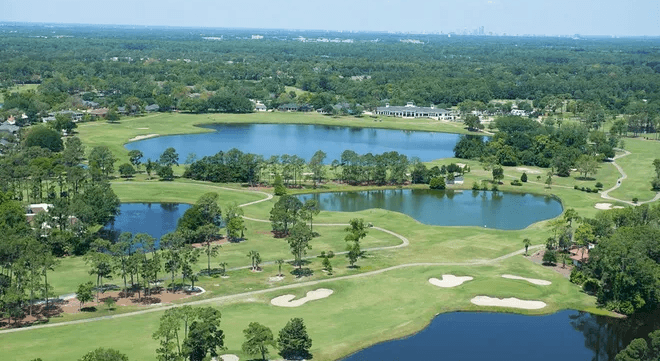
In a feature for the ASGCA journal, leading architects were asked a deceptively simple question: what makes great greens? For Erik, the answer starts before construction begins, with the land itself. He looks for natural places where greens feel inevitable, clustering them where possible to make both building and socializing easier.
Design from the Tee Back
Erik's approach to green design begins at the tee box, not the putting surface. Players who take on the primary hazard are rewarded with softer slopes and makeable putts. Those who bail out face steeper grades and tougher angles. The philosophy is consistent: risk should be rewarded, and every green should feel like part of the entire hole, not a standalone feature dropped into the landscape.
The Double-Triangle Theory
The feature also highlights Erik's double-triangle theory, a framework for designing fairways and greens that serve every level of player simultaneously. By widening landing zones for shorter hitters and narrowing them for longer ones, he effectively builds two golf courses in one. His favorite set of greens? Holes 10 through 15 at Atlantic Beach Country Club, ranging from 2,900 to 10,100 square feet. Variety, by design.